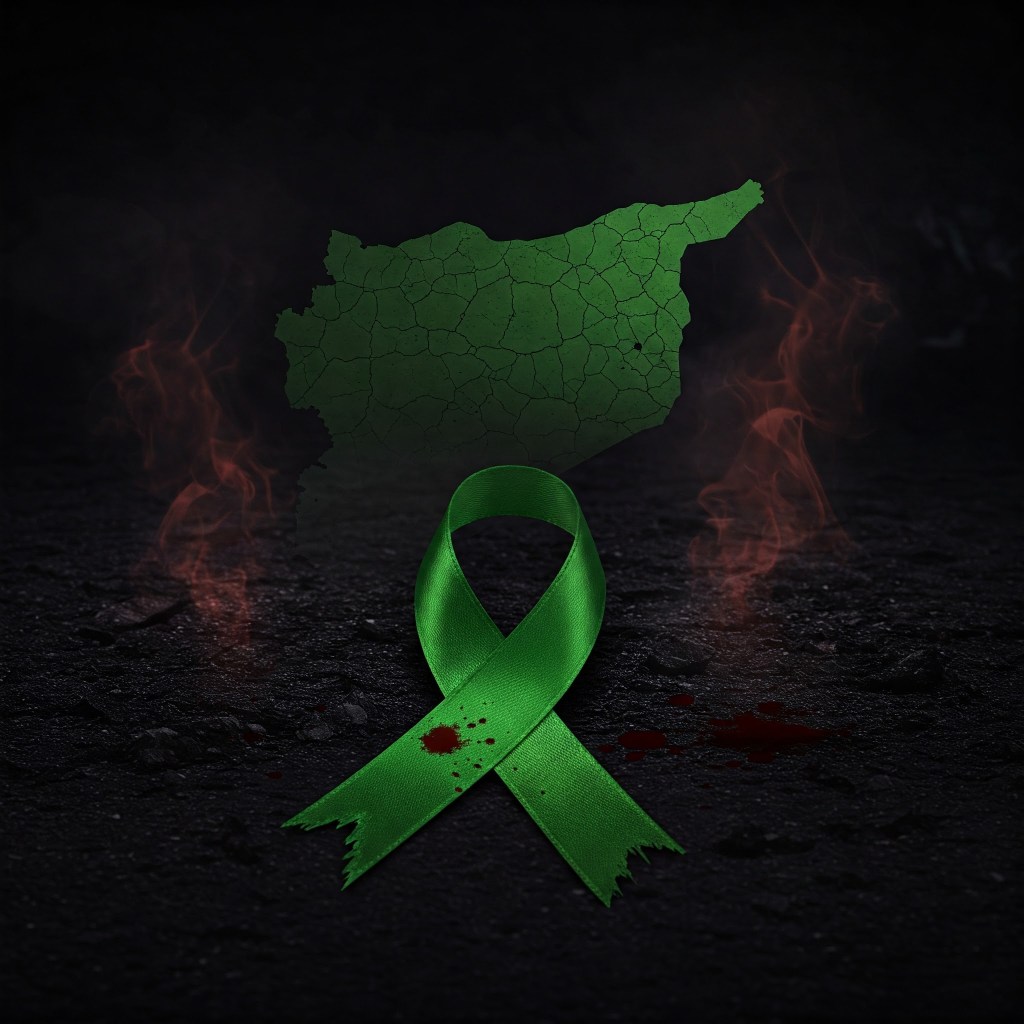
When Syria’s long-ruling Assad regime collapsed 100 days ago, many in the coastal city of Latakia feared what might come next. Latakia is the heartland of the Alawite minority that had formed the backbone of Bashar al-Assad’s support. Those fears soon proved justified. In the hours after Assad’s fall in December, ominous chants and gunfire echoed across Alawite neighborhoods (The Challenges Facing Syria’s Alawites – New Lines Magazine). What followed was a wave of brutal sectarian violence – targeted attacks, reprisals, and humanitarian anguish – that has engulfed Latakia over the past three months.
Sectarian Attacks in the Alawite Heartland
Violence Erupts: Almost immediately after the regime’s collapse, reports emerged of targeted attacks on Alawite communities in Latakia and surrounding areas. In mid-January, armed groups swept through Alawite villages under the guise of “security operations,” setting homes ablaze and executing residents. In one Homs countryside village (Tasnin), gunmen claiming to be from the new authorities’ Military Operations Command killed six villagers and burned seven houses (2025 massacres of Syrian Alawites – Wikipedia). Similar raids later hit villages west of Homs, where residents were beaten and even forced to bark like animals (2025 massacres of Syrian Alawites – Wikipedia). By late February – well before any large pro-Assad insurgency – monitors had documented at least 154 Alawite civilians killed in such sectarian incidents (2025 massacres of Syrian Alawites – Wikipedia).
The Datur Attack: Latakia city itself did not escape the carnage. In the poor Alawite quarter of al-Datur, violence struck amid the post-regime chaos. Local sources described daily raids and abuses in Datur – mass arrests, executions, even deliberate fires – that terrorized the community. Though information on Datur is limited by access restrictions, the UK-based Syrian Observatory for Human Rights (SOHR) listed Latakia’s Datur neighborhood among the sites of recent killings. By early March, Latakia residents were circulating images of what they called a “massacre…carried out against civilians under the pretext of a ‘security operation’”. In one grim incident, dozens of Alawite men from a Latakia-area village were rounded up and summarily shot by armed attackers (Scores killed as Syrian forces seek to crush Alawite insurgency | Reuters). Witnesses later found the victims’ bodies lying in the streets or piled in makeshift mass graves (In Syria’s coastal villages, the Alawite community feels abandoned by the new authorities: ‘We want the attackers to be punished’) (In Syria’s coastal villages, the Alawite community feels abandoned by the new authorities: ‘We want the attackers to be punished’).
“Killings, Executions, Burnings”: The violence peaked during the first week of March, turning parts of Latakia province into killing fields. On March 6, Syria’s new Islamist-led authorities in Damascus claimed that Assad loyalists had launched a coordinated attack on security forces in the Jableh area (2025 massacres of Syrian Alawites – Wikipedia). What followed was an explosion of reprisals against Alawite civilians across the coastal region. Entire families were slaughtered in their homes, and villages set aflame. Human rights monitors reported “killings, field executions, and ethnic cleansing operations” carried out in Alawite mountain towns after the clashes (Syria: 973 civilians killed in Syria in ‘one of the biggest massacres’ since Assad’s fall | World News – The Times of India). In the village of al-Sanobar, for example, survivors described how Islamist fighters allied with the new government stormed in, looted and burned homes, and massacred dozens of residents over three days (In Syria’s coastal villages, the Alawite community feels abandoned by the new authorities: ‘We want the attackers to be punished’) (In Syria’s coastal villages, the Alawite community feels abandoned by the new authorities: ‘We want the attackers to be punished’). One local cleric helped bury 120 victims in four trenches, including women and children left to decompose where they fell (In Syria’s coastal villages, the Alawite community feels abandoned by the new authorities: ‘We want the attackers to be punished’). Nearby, the village of Al-Mukhtareyah saw at least two dozen unarmed men executed in the street on March 7 (Scores killed as Syrian forces seek to crush Alawite insurgency | Reuters). As one activist noted, the assailants appeared to be punishing these communities for their association with the former regime (Scores killed as Syrian forces seek to crush Alawite insurgency | Reuters). Graffiti scrawled on blood-stained walls drove the point home – “You brought this upon yourselves,” read one slogan left by a militia aligned with the new government (Syrians trickle home from sanctuary at Russian air base | Reuters).
Human Toll: Precise casualty counts are difficult to verify, but all sources agree the toll is devastating. By March 9, the Syrian Observatory had documented 830 civilian deaths – most of them Alawites – along with hundreds of fighters killed in the clashes (More than 1,300 Syrians killed in 72 hours amid clashes and acts of revenge | NCPR News). A day later that figure had risen to 973 civilians, including women and children, “liquidated” in what SOHR described as one of the worst sectarian massacres in Syria’s modern history (Syria: 973 civilians killed in Syria in ‘one of the biggest massacres’ since Assad’s fall | World News – The Times of India) (Syria: 973 civilians killed in Syria in ‘one of the biggest massacres’ since Assad’s fall | World News – The Times of India). The UN Human Rights Office likewise reported “hundreds” of non-combatants slain, noting that entire families were shot or stabbed to death in their homes (More than 1,300 Syrians killed in 72 hours amid clashes and acts of revenge | NCPR News). Many victims were deliberately executed, not caught in crossfire – a stark indication that these were revenge killings targeting people for their sectarian identity. As of mid-March, over 1,000 civilians had been killed in Latakia and neighboring Tartous, Homs, and Hama, according to UN estimates (UNFPA Arabstates | Flash Update #1-Syria: Coastal Area Violence). Activists and community leaders warn the true number may be even higher, as countless bodies remain missing or unaccounted for in remote areas consumed by the chaos (In Syria’s coastal villages, the Alawite community feels abandoned by the new authorities: ‘We want the attackers to be punished’).
A Humanitarian Nightmare in Latakia
Crisis Behind a Siege: As violence raged, Latakia’s humanitarian situation deteriorated rapidly. The coastal region, once a regime stronghold, has been largely sealed off in the fighting’s aftermath. Curfews and military cordons imposed by the new authorities have effectively cut off entire towns. All normal services in Latakia ground to a halt; by mid-March, “all health facilities” in the coastal governorates had closed their doors (UNFPA Arabstates | Flash Update #1-Syria: Coastal Area Violence). Clinics and hospitals that provided life-saving care – including maternal health and emergency services – suspended operations due to instability and safety fears (UNFPA Arabstates | Flash Update #1-Syria: Coastal Area Violence). Humanitarian agencies reported they could not reach displaced families in need: “there is no access”, and all field missions to Latakia and Tartous are on hold (UNFPA Arabstates | Flash Update #1-Syria: Coastal Area Violence). Electricity and communications in many Alawite-majority areas have been cut, plunging frightened residents into isolation.
No Escape, No Aid: International journalists and aid workers have struggled to penetrate Latakia’s enclaves amid the unrest. The new government has tightly controlled access to the flashpoint zones. Independent media coverage is virtually absent. Reuters correspondents who visited some devastated villages described being escorted by armed security personnel at all times (Syrians trickle home from sanctuary at Russian air base | Reuters). What they saw was grim: “many homes and shops torched and looted, and villages largely deserted,” with hardly any civilians left on the streets (Syrians trickle home from sanctuary at Russian air base | Reuters). In some areas, soldiers or militiamen have reportedly blocked roads, hampering the delivery of food and medical supplies. “Humanitarian operations have been severely disrupted”, the UN reported, and even UN aid convoys have been unable to proceed without guarantees of safety (UNFPA Arabstates | Flash Update #1-Syria: Coastal Area Violence) (UNFPA Arabstates | Flash Update #1-Syria: Coastal Area Violence). The result is a mounting crisis: tens of thousands have fled, yet those who remain in Alawite districts like Datur or villages like al-Sanobar face shortages of everything from bread to clean water. “We have nothing left,” one displaced Alawite woman said upon returning to her ransacked home, describing how even stored grain and cooking oil had been stolen or destroyed by raiders.
Displacement and Fear: As the violence peaked in early March, entire communities fled for their lives. The Russian military’s Hmeimim airbase, located just south of Latakia, became an impromptu sanctuary for terrified Alawite civilians. By March 14, around 9,000 people – mostly women, children, and elderly from coastal villages – were sheltering at the Russian base (Syrians trickle home from sanctuary at Russian air base | Reuters). Families arrived in packed trucks, some still in nightclothes, after escaping scenes of horror. “We were awoken by gunfire…we ran through the orchards until we reached the base,” recalled Rana Boushieh, who fled al-Sanobar with her children (Syrians trickle home from sanctuary at Russian air base | Reuters) (Syrians trickle home from sanctuary at Russian air base | Reuters). Even in refuge, fear stalked these survivors; many hesitated to go back home when officials began urging them to return. “Honestly, there is definitely fear,” Rana admitted, upon hearing that her village might be secure again (Syrians trickle home from sanctuary at Russian air base | Reuters). For many, home is now a burnt-out ruin. One man guided reporters to the rubble of his family’s house, where his brother and nephew lay dead among the charred remains (Syrians trickle home from sanctuary at Russian air base | Reuters). Such scenes underscore why so many displaced Alawites prefer the spartan safety of a base hangar or a tent in Lebanon over returning to a place where their neighbors were slaughtered. International aid groups have urged Syria’s authorities to grant access and protection so that relief can reach Latakia’s most vulnerable. “Civilians must be protected, humanitarian aid must be allowed in,” pleaded one joint statement by NGOs, as images of mass graves and weeping survivors began to circulate globally.
Unraveling the Narrative: Revenge, Not Rebellion
Not a Two-Sided War: Throughout this turmoil, Syria’s new interim President, Ahmed al-Sharaa, and his government have insisted they are facing an armed insurrection by remnants of the old regime. Official statements blamed “militias loyal to Assad” for igniting the conflict with a surprise attack on March 6 (Syrian forces clash with Assad-linked militants in escalating violence | Reuters) (Syrian forces clash with Assad-linked militants in escalating violence | Reuters). It’s true that on that date, loyalist gunmen ambushed security forces near Jableh, killing over a dozen in a coordinated strike (Syrian forces clash with Assad-linked militants in escalating violence | Reuters). Yet survivors and rights observers emphasize that the mass violence against Alawite civilians began well before that clash. The reprisals were immediateupon Assad’s fall in December – long before any organized loyalist counter-attack. As early as January, humanitarian monitors and the Syrian Observatory (SOHR) were reporting sectarian killings of Alawites in the coastal mountains as new authorities carried out “sweeps” to snuff out any remaining Assad supporters (2025 massacres of Syrian Alawites – Wikipedia) (2025 massacres of Syrian Alawites – Wikipedia). These operations often targeted entire villages simply for being Alawite. “The images…clearly show that a massacre is being carried out against civilians under the pretext of a ‘security operation,’” warned one such report in early March, suggesting that the “remnants of the regime” narrative was being used to justify atrocities.
Disarmed and Defenseless: Importantly, many Alawite communities had already laid down their arms or fled before the bloodshed reached them. In Latakia city’s Datur district, for instance, local pro-Assad militias agreed to surrender their heavy weapons to the new authorities in an attempt to avoid a confrontation (The Challenges Facing Syria’s Alawites – New Lines Magazine) (The Challenges Facing Syria’s Alawites – New Lines Magazine). Similar agreements reportedly played out in other neighborhoods; according to conflict analysts, some Alawite fighters withdrew into the countryside or handed over their guns, effectively dissolving any organized resistance (The Challenges Facing Syria’s Alawites – New Lines Magazine) (The Challenges Facing Syria’s Alawites – New Lines Magazine). “While some Alawites have handed over their weapons, HTS has largely failed to gain the community’s trust,” one report noted, referring to Sharaa’s HTS (Hay’at Tahrir al-Sham) faction now in power (The Challenges Facing Syria’s Alawites – New Lines Magazine). In other words, those who could escape or reconcile did so – the Alawite population was largely defenseless when the revenge attacks descended. The vicious killings of unarmed villagers – women, children, the elderly – further debunk the idea that this was a pitched battle between two armies. Human Rights Watch and other observers stress that the atrocities in Latakia were not collateral damage from fighting, but deliberate reprisals against a community perceived as loyal to the fallen regime.
Revenge as the Driving Force: Evidence from the ground reinforces that sectarian vengeance, not ongoing Alawite rebellion, fueled the carnage. The British-based SOHR and others characterized the onslaught as “executions and massacres…carried out in revenge against the Alawite community”, which had long been associated with Assad (More than 1,300 Syrians killed in 72 hours amid clashes and acts of revenge | NCPR News). Video footage and survivor testimonies indicate many attacks were unprovoked assaults on villages that had already been pacified or surrendered. In al-Sanobar, for example, residents had no heavy weapons when Islamist fighters invaded; many men had either been conscripted by the old army or had fled, leaving mostly civilians. “They killed him in cold blood, just because he was Alawite,” cried one woman in a neighboring town, recounting how her unarmed cousin was dragged out and shot even after he pleaded that he was no fighter. Such accounts underscore that the violence was one-sided. Even Syria’s interim authorities have tacitly acknowledged abuses: after initially denying any massacres, officials admitted there had been “individual violations” by armed crowds “out of control” (Scores killed as Syrian forces seek to crush Alawite insurgency | Reuters). For the families in Latakia, however, these are not isolated incidents but a pattern of persecution. As one Alawite elder in a displacement camp told reporters, “They say it’s because we attacked first – but we never even had a chance. The fighters were gone. They came for us anyway.”
Setting the Record Straight: One hundred days on, the picture that emerges in Latakia is not of a simple counter-insurgency against die-hard Assadists. It is a story of collective punishment – an embattled minority being scapegoated for the sins of a fallen regime. The fact that Alawite clerics and villagers had begun reaching out to the new government in peace, only to be met with slaughter, speaks volumes (The Challenges Facing Syria’s Alawites – New Lines Magazine) (The Challenges Facing Syria’s Alawites – New Lines Magazine). International observers are increasingly clear-eyed about the narrative. The UN Security Council, in a rare moment of unity, condemned the “mass killings of civilians” in Latakia and Tartous and stressed that nothing could justify the targeting of people based on their sect (Scores killed as Syrian forces seek to crush Alawite insurgency | Reuters). Even some within Syria’s new ruling coalition have called for accountability, worried that unchecked revenge is undermining the promise of a fresh start. “Those who assault civilians will be held accountable,” President Sharaa insisted in a recent speech (Scores killed as Syrian forces seek to crush Alawite insurgency | Reuters) – a pledge met with skepticism by many who witnessed the past weeks’ events. For Latakia’s Alawites, actions will speak louder than words. Their plight over the last 100 days has been a sobering chapter of Syria’s post-Assad era: a frenzy of retribution that began the moment the old order fell, and a humanitarian calamity that continues to unfold, largely hidden from the world’s eyes.
In memory of the lives lost, community leaders are gathering names of the dead – from the farming families of al-Sanobar to the shopkeepers of Datur – hoping one day to hold the perpetrators to account. In the meantime, they urge the world not to look away. What happened in Latakia since Assad’s fall is a tragedy that must be understood for what it is: not a war between armies, but the attempted erasure of a community in the chaotic dawn of a new Syria.
Sources:
- Firsthand survivor testimonies and investigations by human rights monitors, including Human Rights Watch and the Syrian Observatory for Human Rights, document the executions, house burnings, and mass abductions of Alawite civilians in Latakia’s countryside. These reports have been cross-referenced with on-the-ground accounts in outlets like The Guardian and Reuters.
- Data from the UN and international NGOs highlight the humanitarian impact: the UNFPA reported “more than 1,000 civilians” killed and some 51,000 displaced by mid-March, with all local clinics shut down and aid access blocked due to the violence (UNFPA Arabstates | Flash Update #1-Syria: Coastal Area Violence) (UNFPA Arabstates | Flash Update #1-Syria: Coastal Area Violence). Journalists on tightly controlled visits saw torched homes and deserted villages, confirming the scale of destruction (Syrians trickle home from sanctuary at Russian air base | Reuters) (Syrians trickle home from sanctuary at Russian air base | Reuters).
- Reporting by Reuters, AFP (France24), and NPR provides a timeline of events, indicating that retaliatory attacks on Alawites began immediately after Assad’s ouster. By March 10, SOHR counted 973 civilian deaths, mostly Alawites (Syria: 973 civilians killed in Syria in ‘one of the biggest massacres’ since Assad’s fall | World News – The Times of India), and described the killings as “massacres… in revenge” (More than 1,300 Syrians killed in 72 hours amid clashes and acts of revenge | NCPR News) rather than responses to active combat. These outlets also relay officials’ statements and Alawite activists’ rebuttals, helping clarify that many Alawite fighters had already surrendered or fled when the attacks on civilians commenced (The Challenges Facing Syria’s Alawites – New Lines Magazine) (The Challenges Facing Syria’s Alawites – New Lines Magazine).
The above information is drawn from credible international sources and on-site reporting, compiled to shed light on Latakia’s harrowing journey through violence and humanitarian crisis in the first 100 days after Assad – a story that must be told, and not forgotten. (More than 1,300 Syrians killed in 72 hours amid clashes and acts of revenge | NCPR News)

 Syria SHOWS